
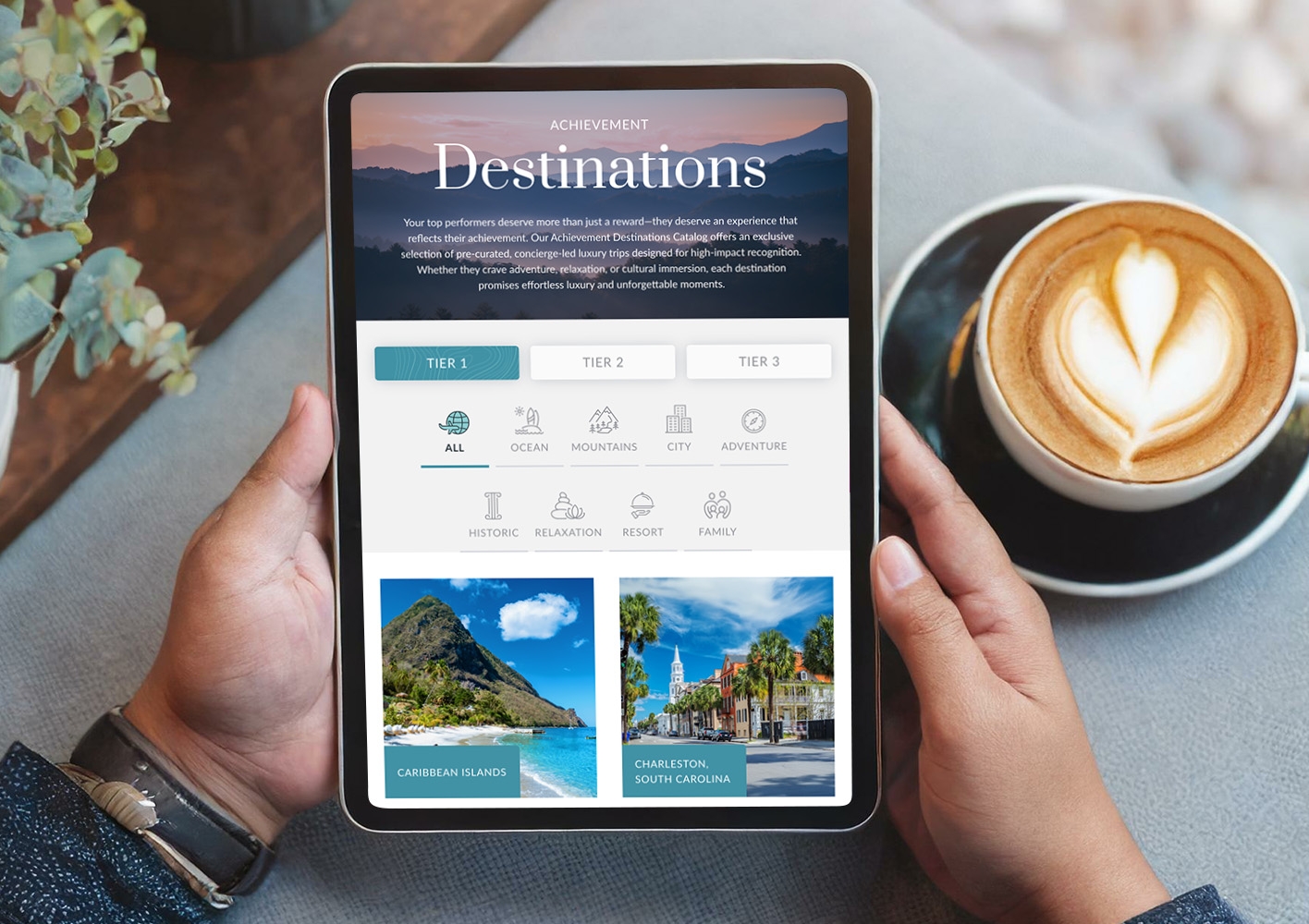
When designing an employee recognition program, one of the most strategic decisions you’ll face is whether to offer U.S. domestic vs. international incentive travel. Both approaches deliver powerful emotional impact and lasting memories, but they serve different purposes, accommodate different budgets, and resonate with employees in distinct ways.
The good news? You don’t necessarily have to choose just one. The most effective recognition programs leverage both domestic and international destinations strategically, matching the right experience to the right milestone. Here’s how to decide which option, or combination, works best for your organization.
The Case for U.S. Domestic Incentive Travel
U.S. Domestic travel rewards offer compelling advantages that make them ideal for many recognition scenarios, particularly for companies building or scaling their programs.
Lower Investment, High Perceived Value
U.S. Domestic destinations typically fall within lower price tiers without sacrificing luxury or impact. A curated experience in New Orlean’s French Quarter, a resort stay in Scottsdale’s desert landscape, or a summer adventure in Colorado delivers genuine luxury at accessible price points. For companies testing incentive travel programs or recognizing achievements at multiple levels, domestic options provide excellent ROI.
Simplified Logistics and Faster Deployment
Domestic U.S. travel eliminates international flight coordination, passport requirements, and visa considerations. This operational simplicity means programs can deploy faster, critical for timely recognition. When an employee earns a spot reward or achieves a quarterly milestone, a weekend escape to Miami or Seattle can be organized and delivered within days, not months.
Familiar Comfort with Fresh Perspective
Many employees appreciate the accessibility of U.S. domestic travel, especially those with family obligations, limited vacation time, or concerns about international travel. A luxury experience in New York, San Diego, or Miami provides the excitement of discovery without the pressure of navigating foreign languages, currencies, or customs.
Domestic rewards also work exceptionally well for employees who travel frequently for business. After months of hotel conferences and airport terminals, a thoughtfully curated domestic escape, perhaps to California Wine Country or Hidden Pond Resort in Maine, offers genuine relaxation without the exhaustion of long-haul flights.
Year-Round Availability and Flexible Timing
U.S. Domestic destinations offer greater scheduling flexibility. Employees can typically book travel during their preferred seasons without extensive lead time, making these rewards more practical for those balancing work demands and personal calendars.
The Power of International Incentive Travel
International destinations carry a distinctive prestige and emotional impact that domestic travel cannot replicate. For significant achievements and career-defining milestones, international rewards deliver outsized motivation.
Aspirational Appeal That Drives Performance
International travel represents the pinnacle of recognition for most employees. The opportunity to explore Tokyo’s temples, walk Florence’s cobblestone streets, or experience Iceland’s dramatic landscapes creates motivation that extends far beyond the reward recipient. When team members witness colleagues being recognized with international travel, it signals achievement worth pursuing.
Research from the Incentive Travel Index confirms this: 58% of senior managers recognize travel rewards as critical to improving motivation and culture, with international destinations generating the highest levels of aspiration.
Once-in-a-Lifetime Experiences
International rewards create stories employees share for years. A week exploring Italy’s Tuscany region, discovering Thailand’s cultural richness, or adventuring through Costa Rica’s jungles becomes a defining memory, one intrinsically linked to the company that made it possible. This emotional connection drives loyalty and retention in ways domestic travel, while valuable, cannot match.
Premium Recognition for Premium Achievement
International travel clearly distinguishes between good performance and exceptional performance. For top-tier achievements, President’s Club qualification, major account wins, or years-of-service milestones, international destinations communicate the magnitude of accomplishment. They’re not incremental rewards; they’re transformational experiences.
Cultural Enrichment and Personal Growth
International travel offers employees genuine personal development. Experiencing new cultures, navigating unfamiliar environments, and gaining global perspectives contributes to personal growth that employees deeply value. For many, these experiences represent opportunities they might never pursue independently, making the reward even more meaningful.
Strategic Considerations: Matching Destinations to Recognition Goals
The most effective approach to domestic vs. international incentive travel isn’t choosing one over the other, it’s strategically deploying both based on achievement level, program goals, and employee preferences.
Budget Allocation
Consider tiered pricing that aligns investment with achievement significance. Domestic destinations typically range from $5,000-$8,500, while international experiences extend from $8,500 to $20,000+. This structured approach allows you to recognize various achievement levels appropriately while maintaining cost predictability.
Recognition Frequency
For recurring recognition, quarterly achievements, spot bonuses, or annual service awards, domestic travel provides sustainable repeatability. International rewards work best for less frequent, higher-stakes milestones that warrant extraordinary recognition.
Employee Demographics and Preferences
Younger employees often gravitate toward international adventure and cultural exploration. Employees with families may prefer domestic destinations with shorter travel times and familiar amenities. Remote workers frequently value experiences that reconnect them with company culture, whether that’s a team gathering at a domestic resort or an international destination that celebrates their contributions.
The solution? Offer choice. Programs that present both domestic and international options within appropriate tiers allow employees to select rewards aligned with their life circumstances and personal preferences.
Program Maturity
Organizations launching recognition programs often start with domestic destinations to establish operational processes, measure impact, and build internal support. As programs mature and demonstrate ROI, international destinations can expand offerings and elevate program prestige.
Making U.S. Domestic vs. International Incentive Travel Work Together
The most sophisticated recognition programs don’t pit domestic against international travel, they integrate both seamlessly.
Consider structuring your program with progressive reward tiers. Entry-level achievements might offer premier domestic destinations, weekend getaways to Nashville, cultural experiences in Washington, DC, or beach resorts in the Caribbean. Mid-tier recognition expands to luxury domestic resorts and select international cities like Dublin or Barcelona. Top-tier achievements unlock bucket-list international destinations: Australia, Japan, Peru, or multi-country European experiences.
This approach accomplishes multiple goals simultaneously. It creates clear performance pathways, accommodates diverse budgets and preferences, maintains high perceived value across all levels, and positions international travel as the ultimate recognition while keeping domestic rewards aspirational.
The Operational Reality: What Actually Matters
When evaluating U.S. domestic vs. international incentive travel, remember that operational complexity can undermine even the most thoughtfully designed programs. The best destination means nothing if logistics create frustration for HR teams or recipients.
Modern concierge-led travel reward programs eliminate these challenges entirely. Whether employees choose Aruba or Arizona, the operational experience remains consistent: transparent tier-based pricing, complete logistical management from flights to activities, personalized concierge service for trip planning, and 24/7 support during travel.
This operational consistency means HR teams can confidently offer both domestic and international options without doubling administrative burden or program complexity.
What Your Employees Actually Want
Data from SHRM shows that companies with effective recognition programs experience 31% lower turnover. But effectiveness depends on meeting employee needs, not checking program boxes.
Employees want choice and personalization, options that fit their lives, not one-size-fits-all mandates. They want meaningful experiences, travel that creates memories, not perfunctory trips. They want recognition that feels proportionate, rewards that match achievement significance. They want simplicity, programs that honor them without creating administrative burdens.
Both domestic and international incentive travel deliver these outcomes when thoughtfully integrated into a comprehensive recognition strategy.
The answer to U.S. domestic vs. international incentive travel isn’t binary. The best programs leverage both strategically, matching destinations to achievements while respecting employee preferences and operational realities.
Explore Luxury Concierge Travel’s complete catalog of domestic and international destinations spanning three curated tiers, from weekend escapes to international adventures.